

High-touch surfaces act as reservoirs for bacteria and viruses, these hotspots require more than just a cursory wipe; they demand a strategic, science-based approach to disinfection. For medical facilities in Reading, PA that means; implementing rigorous standards that protect both your patients and your professional reputation.
Why High-Touch Disinfection is Critical for Medical Facilities
Effective hospital cleaning services in Reading, PA are built on the understanding that not all surfaces are created equal. In a medical office, certain objects are touched with extreme frequency, making them highly efficient vectors for cross-contamination. According to the CDC, environmental surfaces play a significant role in the transmission of healthcare-associated infections (HAIs).
By focusing on high-touch disinfection, Ziva Cleaning Services breaks the chain of infection. This proactive approach is vital for clinics in Reading that see a high volume of pediatric or elderly patients more vulnerable to environmental pathogens. Regular medical cleaning is a calculated defense strategy designed to keep your staff healthy and your exam rooms safe for every person who walks through your doors. Pediatric practices in particular need a tighter playbook for shared toys, seating, and waiting-area surfaces, which is what our safety tips for pediatric clinics walk through step by step.
High-Touch Hotspots in Your Medical Facility
Identifying exactly where germs congregate is the first step in a successful cleaning plan. A generic cleaning crew might miss the small details, but specialized high-touch area cleaning focuses on the specific touchpoints unique to healthcare environments.
The Waiting Room and Reception
The lobby is often the most communal space in a medical practice. High-touch areas here include:
Check-in Kiosks and Pens: Handled by every arriving patient.
Armrests on Chairs: Frequently gripped by patients during wait times.
Door Handles and Push Plates: Touched by everyone entering or exiting the building.
Clinical Exam Rooms
In the heart of the facility, the risks are even higher. We prioritize:
Exam Table Rails and Adjustment Knobs: Critical points of contact between patients and providers.
Light Switches and Thermostats: Often overlooked but touched constantly by staff.
Sink Faucets and Soap Dispensers: Essential areas for hand hygiene that can ironically become contaminated themselves.
Administrative and Staff Zones
To prevent the spread of illness among your team, administrative areas must be included in the disinfection cycle. Keyboards, telephone handsets, and breakroom appliance handles are notorious for harboring germs that lead to staff absenteeism. A comprehensive medical cleaning checklist ensures these behind the scenes areas remain just as sterile as the patient facing rooms.
The Science of Pathogen Survival: Why "Once a Day" is Not Enough
A common misconception in the industry is that a single nightly cleaning is sufficient. However, in high traffic facilities, a surface disinfected at 6:00 PM can be re-contaminated by 8:00 AM the following morning. Bacteria and viruses thrive on non-porous surfaces like plastic and stainless steel. When a patient touches a contaminated surface, they can inadvertently carry those microbes into an exam room. This "transfer effect" is why high-touch disinfection must be consistent.
Partnering with a medical cleaning company ensures that your facility maintains a baseline of safety throughout the day. For sensitive areas, you may even consider how specialized operating room cleaning standards can be adapted to your general practice to provide an extra layer of protection.
The Seven-Step Standard: Hospital-Grade Protocols for Local Clinics
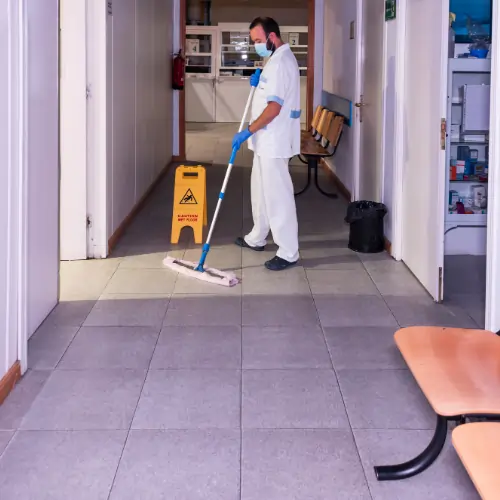
To deliver consistent results, Ziva Cleaning Services follows a disciplined, seven-step cleaning process modeled after the world class standards found in major hospitals. This ensures that no surface is missed and that the cleaning is performed in a way that prevents moving germs from one area to another.
High-Dusting: Removing dust from vents and light fixtures to prevent particles from falling onto disinfected surfaces.
Waste Removal: Emptying biohazard and general waste bins safely.
Damp Wiping: Applying disinfectants to all high-touch surfaces.
Restroom Sanitation: Deep-cleaning sinks, toilets, and floors with area-specific tools.
Dry Mopping: Clearing floors of debris.
Quality Inspection: A supervisor-led check to ensure every protocol was followed.
Damp Mopping: A final floor disinfection using microfiber technology.
By working in a sequential order, (from the back of a room to the exit), we ensure that the most critical areas receive the most attention. This systematic approach is what separates professional medical cleaning from standard janitorial work.
Verification and Accountability: Proving the Clean
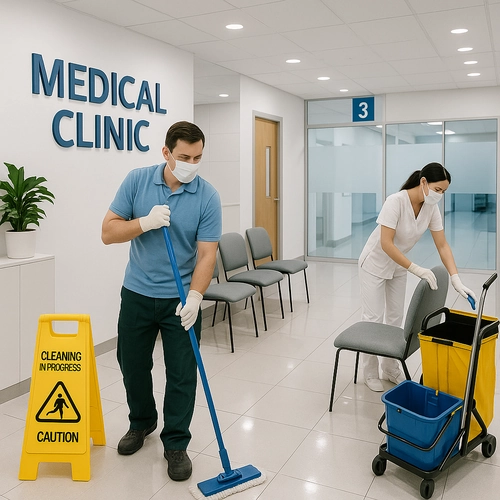
In a medical setting, you shouldn't have to guess if a surface is clean. Ziva Cleaning Services believes in objective verification. We utilize modern tools to ensure our clients receive the highest level of service.
ATP Swabbing: This technology measures organic matter on a surface. A quick swab can tell our team if a surface is truly sanitized at a molecular level.
Black-Light Inspections: By using invisible fluorescent markers on high-touch points before cleaning, our supervisors can verify that those specific areas were physically scrubbed by the cleaning crew.
Why Reading, PA Hospitals Trust Ziva Cleaning Services
Choosing a partner for medical cleaning in Reading, PA is a decision that impacts your patients’ health and your facility's longevity. Local medical professionals choose us because we combine hospital-grade rigor with local accountability. We understand the specific needs of healthcare providers in our community and tailor our checklists to meet the unique flow of each clinic.
A clean facility significantly improves patient retention. When a patient sees a sparkling waiting room and organized exam areas, their confidence in the medical care they are about to receive increases. The safety of your Reading, PA medical facility starts at the surface. Don’t settle for a cleaning service that treats your clinic like a standard office building. Your patients deserve the specialized protection that only a dedicated medical cleaning expert can provide. Contact us today for a facility walkthrough and a customized cleaning plan for your Reading, PA healthcare facility.


