

Professional medical cleaning delivers measurable return on investment by reducing healthcare-associated infections, improving patient satisfaction scores that affect reimbursement, and protecting clinical staff productivity. With the CDC reporting that 1 in 31 hospital patients has a healthcare-associated infection and annual HAI costs of $28 to $33 billion, the case is financial, not just clinical.
Every practice manager, operations director, and clinic owner weighing the cost of professional cleaning eventually asks the same question: does it actually pay off? The honest answer is yes, and the numbers are larger than most facilities realize. Below, Ziva Cleaning Services breaks down the four ROI drivers that turn medical cleaning from a line item into a revenue-protecting investment.
What Does Professional Medical Cleaning Actually Cost Versus In-House?
Medical cleaning services costs more than standard commercial cleaning because the protocols, products, and training are more demanding. Outsourced medical cleaning typically runs at a 25 to 50 percent premium over general office cleaning, reflecting hospital-grade disinfectants, bloodborne pathogen training, and compliance documentation. For a detailed breakdown of what healthcare facilities can expect to pay, our complete pricing guide for medical cleaning services covers the cost factors in depth.
The in-house alternative looks cheaper on paper and rarely is. A full accounting includes wages, payroll taxes, benefits, paid time off, workers' compensation, bloodborne pathogen training, ongoing OSHA and HIPAA education, cleaning equipment, hospital-grade chemicals, supervision time, and the cost of turnover when staff leave. For a small practice hiring one full-time custodian at $45,000 plus benefits, the loaded annual cost often exceeds $60,000 before any supplies are bought.
We see facilities make the switch when they add up those hidden costs honestly. Outsourcing converts cleaning into a predictable, single-line monthly expense with no hiring risk, no training burden, and no gap coverage problem when someone calls in sick.
How Professional Medical Cleaning Prevents HAIs and Protects Revenue
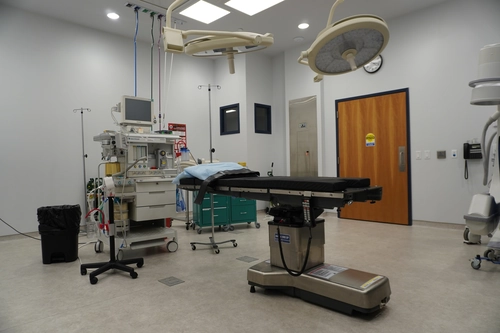
Infection prevention is the single largest ROI driver, and the numbers are striking. The most common healthcare-associated infections carry substantial per-case costs that directly hit facility margins when they occur:
Infection Type | Average Cost Per Case |
|---|---|
Central Line-Associated Bloodstream Infection (CLABSI) | $45,814 |
Ventilator-Associated Pneumonia (VAP) | $40,144 |
Surgical Site Infection (SSI) | $20,785 |
C. difficile Infection (CDI) | $11,285 |
Catheter-Associated UTI (CAUTI) | $896 |
Those are direct medical costs alone. Under the Centers for Medicare and Medicaid Services Hospital-Acquired Condition reduction program, facilities in the lowest-performing quartile lose 1 percent of all Medicare payments, which extends the financial exposure well beyond the case itself.
Professional medical cleaning reduces this risk through protocols designed specifically for infection control: EPA-registered hospital-grade disinfectants applied with documented dwell times, color-coded microfiber systems to prevent cross-contamination between zones, terminal cleaning procedures after high-risk procedures, and HEPA filtration for airborne particle capture. These are the same methods that drive our postoperative cleaning protocols for preventing hospital-acquired infections.
Preventing even one HAI per year typically recovers the full annual cost of professional cleaning for a small-to-mid-size facility. That is the math that makes the ROI argument unavoidable.
Patient Satisfaction, HCAHPS Scores, and Reimbursement
Cleanliness connects directly to facility revenue through patient satisfaction measurement. The Hospital Consumer Assessment of Healthcare Providers and Systems (HCAHPS) survey includes a specific question on the cleanliness of the hospital environment, and HCAHPS scores contribute to the CMS Hospital Value-Based Purchasing program that redistributes 2 percent of Medicare payments based on performance. Hospitals with higher scores earn higher reimbursement; hospitals with lower scores face penalties.
For outpatient practices, specialty clinics, and dental offices that fall outside formal HCAHPS reporting, the mechanism is identical even if the measurement is informal. Patients who perceive a facility as clean are more likely to return, recommend it, and leave positive reviews. Patients who notice dust, smudged glass, or bathroom odors form immediate judgments about clinical quality regardless of the care they receive.
A visibly maintained facility reduces patient anxiety on arrival, reinforces trust in the provider, and supports the online reputation that drives new-patient acquisition. For a practice where a single new patient is worth hundreds to thousands of dollars in lifetime value, the economics of consistent cleanliness are straightforward.
Staff Productivity, Absenteeism, and Retention
The third ROI pillar is operational. When cleaning responsibilities fall on clinical staff, facilities pay nursing-grade wages for custodial-grade work. A registered nurse billed internally at $40 to $60 per hour cleaning waiting room chairs is an expensive use of clinical time, and every hour spent cleaning is an hour not spent on patient care, documentation, or revenue-generating activity.
Professional cleaning also reduces staff sick days. Properly disinfected high-touch surfaces, shared equipment, and restrooms cut the transmission of common illnesses among employees. Fewer sick days mean fewer schedule disruptions, less overtime to cover gaps, and more consistent patient throughput. The effect is most visible during cold and flu season, when poorly maintained facilities often see absenteeism spike at the exact moment patient volume rises.
There is a retention benefit as well. Clinical staff consistently rank facility cleanliness among the factors that affect job satisfaction. In a tight healthcare labor market, where replacing a nurse can cost tens of thousands of dollars in recruiting and onboarding, small morale levers matter. A clean, well-maintained workplace is one of them.
Compliance and Liability Reduction
Some of the largest ROI wins come from the costs that never happen. Professional medical cleaning companies operate inside a web of regulatory requirements that in-house teams rarely document as thoroughly: HIPAA (including the Business Associate Agreement and "avert eyes" protocol for protected health information), the OSHA Bloodborne Pathogens Standard (29 CFR 1910.1030), CDC disinfection guidelines, and EPA-registered disinfectant requirements. Our hospital guide to HIPAA-compliant medical cleaning details what proper compliance looks like in practice.
A professional medical cleaning provider carries liability insurance, bonded staff, background-check documentation, training records, and incident response procedures that serve as a legal firewall for the facility. One failed health inspection, one HIPAA breach from improperly handled documents, or one bloodborne pathogen exposure incident can produce costs that dwarf years of cleaning savings. The difference between a compliant cleaning program and a casually managed one often becomes visible only when something goes wrong, which is the worst possible time to discover the gap.
The Real ROI Calculation: What Healthcare Facilities Actually Save
The complete ROI picture combines all four drivers into a single equation. When facilities model the full financial impact honestly, the calculation usually looks like this:
Annual professional cleaning cost: A fixed, predictable outsourced contract.
Prevented HAI cost: Even one avoided case per year typically exceeds the entire cleaning budget.
Patient satisfaction and reimbursement lift: Incremental revenue from higher HCAHPS scores, improved reviews, and better patient retention.
Reclaimed clinical hours: Nursing and provider time redirected from cleaning tasks to patient care and billing.
Avoided compliance exposure: Reduced risk of inspection failures, HIPAA penalties, and OSHA violations.
Even with conservative inputs, a mid-size practice will typically see the cleaning contract recovered several times over in a single year. For larger facilities, where a single HAI event can exceed $45,000 and one point of HCAHPS improvement can move hundreds of thousands of dollars in reimbursement, the ratio widens further. This is why experienced operations directors treat medical cleaning as a revenue-protecting function, not a cost center.
The question is not whether professional medical cleaning pays for itself. For any facility with meaningful patient volume, compliance obligations, or reimbursement exposure, it almost always does. The real question is which provider actually delivers the protocols that produce the return.
What to Look for in a Medical Cleaning Partner
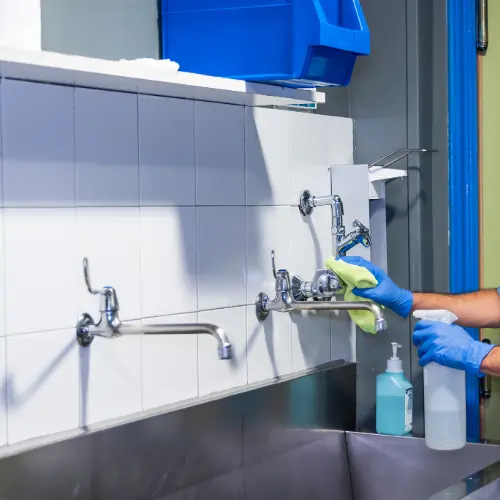
Not every cleaning company can deliver these outcomes. The gap between a generic janitorial provider and a true healthcare cleaning partner shows up in the documentation, the training, and the protocols. Before signing a contract, verify that the provider offers:
Healthcare-specific training in bloodborne pathogens, HIPAA, and infection control
Fully bonded, insured, and background-checked staff
Industry-specific protocols for medical environments, not a generic commercial template
Flexibility for after-hours and weekend scheduling that works around patient operations
Transparent, line-item pricing with a clear scope of services
Local accountability and direct communication with ownership or senior staff
Ziva Cleaning Services has delivered specialized healthcare facility cleaning across Berks County and the surrounding region for over 14 years. We are family-owned, certified, bonded, insured, and staffed by background-checked technicians trained specifically for medical environments. Our approach follows the same structured protocols outlined in the ultimate medical cleaning checklist, adapted to each facility's specific layout and workflow.
Schedule a Free On-Site Assessment
Every medical facility has different square footage, patient volume, compliance obligations, and operational constraints. We build custom cleaning programs around those realities, not a template. Contact us for a free on-site assessment and a transparent quote tailored to your facility.


