

What Are Daycare Cleaning Services?
Daycare cleaning services sit within the broader category of specialized commercial cleaning, focused on facilities that care for infants, toddlers, and pre-K children. The work is contracted by a daycare director or owner and delivered by a professional cleaning company on a recurring schedule, typically nightly, weekly, or both.
The service is distinct from cleaning for K-12 educational facilities and from general office janitorial work. Children under five spend much of their time on the floor, share toys constantly, put items in their mouths, and need their environment to support frequent diaper changes. The surfaces, risk zones, and product requirements in a daycare differ from those in a school cafeteria or an open-plan office.
Cleaning vs. Sanitizing vs. Disinfecting in a Childcare Setting
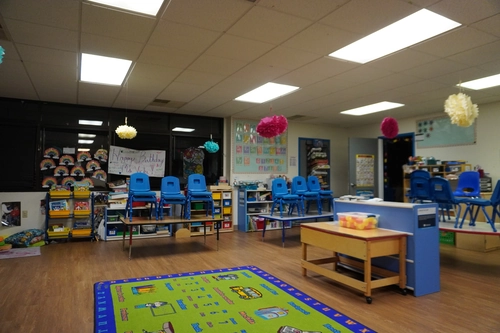
Each of these three terms describes a different process, and a daycare cleaning program needs all three. According to guidance from the CDC for early care and education settings, surfaces should always be cleaned before they are sanitized or disinfected, since dirt and soil block chemical agents from reaching germs.
Term | What it does | Where it's used in a daycare |
|---|---|---|
Cleaning | Removes visible soil, dirt, and impurities from surfaces using soap and water | All surfaces, daily |
Sanitizing | Reduces bacteria to levels considered safe by public health codes | Toys, food contact surfaces, infant feeding items |
Disinfecting | Kills remaining pathogens after cleaning, using stronger chemical products | Diaper changing stations, restrooms, after illness or body-fluid exposure |
A daycare that only cleans without sanitizing or disinfecting will spread illness through shared toys and food surfaces. A daycare that disinfects without cleaning first wastes product and leaves germs in place. Our cleaning teams use all three in sequence, with the right product matched to the right surface and exposure level.
What Daycare Cleaning Services Cover
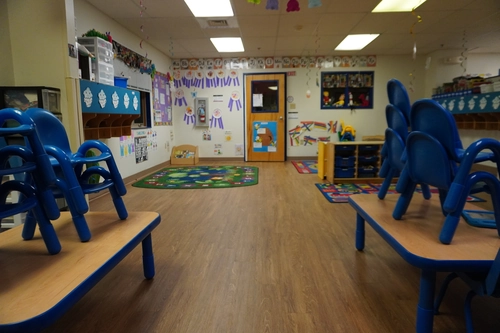
The actual scope of a professional daycare cleaning service varies by facility, but most contracts split into two layers: routine work performed every visit, and specialized periodic services that happen on a longer cycle.
Routine daily and nightly tasks
The recurring core of the service. On a typical nightly visit, our team handles:
Vacuuming, sweeping, and mopping all classroom and common-area floors
Disinfecting high-touch surfaces, including doorknobs, light switches, cubby latches, faucet handles, and tabletops
Restroom cleaning, sanitization, and consumable restocking
Kitchen and snack-area cleaning, with sanitization of food prep and feeding surfaces
Waste removal and bin sanitation
Tidying and resetting classrooms for the next day
Spot cleaning of glass partitions, windows, and any visible spills
Some facilities pair nightly cleaning with daytime cleaning support for spill response, restroom monitoring, and high-traffic upkeep during operating hours.
Specialized periodic services
Deeper work scheduled on a longer cadence, typically monthly, quarterly, or seasonally:
Carpet extraction and upholstery cleaning
Hard-floor stripping, waxing, and polishing
Nap mat and cot deep cleaning
Window cleaning, interior and exterior
Air vent and HVAC register cleaning
Deep toy sanitization with full-bin rotation
Terminal disinfection after illness outbreaks
Summer and winter break deep cleans, when the facility is closed
High-Priority Areas and Surfaces in a Daycare
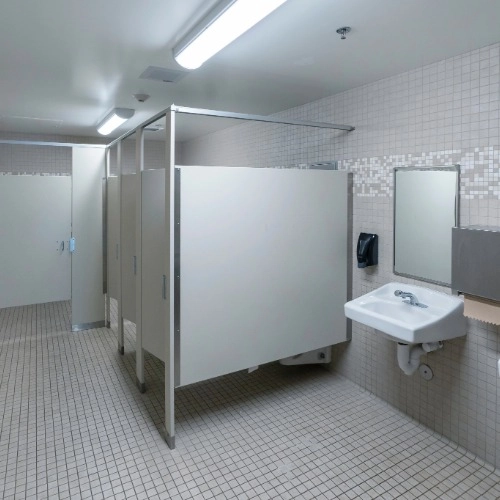
Within the overall scope, certain areas in a daycare carry higher transmission risk and need more frequent or more intensive cleaning. In order of priority:
Diaper changing stations: Disinfected between every change, not just at end of day. The single highest-priority surface in any infant or toddler room.
Toys, especially mouth-contact toys: Items that infants and toddlers put in their mouths need sanitization after each child finishes with them. Soft toys and stuffed animals should be laundered weekly.
Food prep, snack tables, and feeding items: Sanitized after every meal. Bottles, sippy cups, and high-chair trays need food-safe cleaning that does not leave chemical residue.
Restrooms and handwashing sinks: Cleaned and disinfected daily. Sinks at child height accumulate splash-borne germs faster than adult-height fixtures.
High-touch surfaces in shared spaces: Doorknobs, light switches, handrails, sign-in tablets, art-supply caddies, and storage cubby latches.
Nap mats, cribs, sheets, and blankets: Mats wiped down daily, linens laundered weekly or whenever soiled.
Outdoor play equipment and sandboxes: Where applicable, periodic cleaning to remove organic debris and reduce surface bacteria.
How Often Should a Daycare Be Cleaned?
A professional daycare cleaning company combines daily core work, weekly deeper passes, monthly maintenance, and immediate response to spills, accidents, and illness.
Frequency | Tasks |
|---|---|
Daily / nightly | High-touch surfaces, classrooms, restrooms, food areas, floors, waste removal, diaper station disinfection between changes |
Weekly | Soft toys and stuffed animals, soft furnishings, deeper restroom clean, behind-furniture cleaning, refrigerator interior, art supply rotation |
Monthly | HVAC vents and ceiling fans, window cleaning, deep carpet cleaning, hard-floor maintenance |
Immediate / as-needed | Spills, body fluids, after diaper accidents, after illness outbreaks (terminal disinfection) |
Frequency depends on facility size, age groups served, and current illness conditions. Infant rooms typically need more frequent disinfection than pre-K classrooms because of diapering volume and how often infants mouth shared objects. During flu season or after a confirmed illness, our schedules step up rather than waiting for the next routine visit.
How Daycare Cleaning Differs from General Commercial Cleaning
Hiring a generic janitorial company to clean a daycare is a common mistake. Background-checked staff is non-negotiable. Many states require it for anyone with regular access to a licensed childcare facility, and most parents expect documentation.
Child-safe product knowledge is second. Daycares need fragrance-free, low-residue, EPA-registered products that do not leave chemical residue on mouth-contact surfaces. The right disinfectant for an office may be too harsh for a toddler classroom.
After-hours scheduling is third. Most daycares operate from early morning through early evening, which leaves a narrow nightly cleaning window, and the crew needs secure access procedures since the facility sits empty overnight.
Environment-specific familiarity is fourth. Cribs, nap mats, diaper stations, sensory tables, and toy bins take specific experience to handle correctly, including which products are safe and how to rotate sanitization across the toy inventory.
Our team has built protocols around these specifics across 14 years of multi-industry work in educational, medical, and shared-occupancy environments.
In-House Cleaning vs. Hiring a Professional Service
Many small daycares start with in-house cleaning handled by teaching staff or a part-time employee. As the facility grows, the math shifts.
Consideration | In-house cleaning | Professional service |
|---|---|---|
Staff time | Teachers and assistants take on cleaning duties | Teachers focus on care and curriculum |
Equipment | Limited to what the facility purchases | Commercial-grade extractors, sanitizers, HEPA vacuums |
Consistency | Varies by individual and shift | Documented scope, recurring quality checks |
Specialized knowledge | Generalist | Trained in childcare-specific surfaces and products |
Liability and insurance | Carried by the facility | Service carries its own liability coverage |
Cost structure | Lower direct cost, higher indirect cost in staff time, burnout, and turnover | Direct line-item cost that offsets indirect costs |
In-house cleaning works for a small home daycare with one room and a handful of children. Once a facility is staffing dedicated classrooms, paying teachers to clean instead of teach is often not the cheaper option once burnout, turnover, and inconsistency are factored in. Before signing with any provider, work through the key questions to ask before hiring a cleaning company and the selection criteria below.
How to Choose a Daycare Cleaning Provider
When comparing daycare cleaning companies, the criteria below separate a daycare-capable cleaning company from a generalist who happens to take the contract.
Background-checked, bonded, and insured staff: Verify the provider's screening process before any visit. Ask for documentation if needed.
Specific experience cleaning childcare or comparable shared-occupancy facilities: Schools, medical offices, and care environments translate. Generic office cleaning does not.
Use of EPA-registered, child-safe, low-residue products: The provider should be able to name the products they use and explain why each is appropriate for the surface.
Documented service scope: A clear line-item proposal showing exactly what each visit includes. Vague pricing leads to scope drift and disputes.
Flexible scheduling and secure access procedures: The provider should work around your operating hours and follow your facility's access protocols.
Local accountability: A direct line to the owner or account manager beats a national franchise call center every time. When something needs adjusting, the response should come from someone who knows your facility.
Daycare cleaning sits alongside the rest of our school cleaning services, which cover daycares, K-12 classrooms, private schools, and universities.
If you operate a daycare in Berks County or the surrounding Pennsylvania region, our team can put together a free on-site assessment and a clear scope quote built around your hours, facility layout, and age groups served. We have 14 years of experience cleaning education, medical, and other shared-occupancy facilities across the region.


