

Church cleaning services are professional cleaning programs designed for religious facilities, covering sanctuaries, pews, fellowship halls, restrooms, kitchens, and offices. The CDC recommends cleaning high-touch surfaces in community facilities at least once daily, and churches with weekly services, childcare programs, and weekend events face higher contamination risks than typical commercial spaces.
What Are Church Cleaning Services?
Religious facilities carry preservation responsibilities that standard janitorial work can miss. Stained glass, wood pews, antique fixtures, and stone floors require specific products and methods that won't strip finishes or damage historic materials. Volunteer cleaning crews handle a lot of this work in many congregations, but consistency and liability gaps eventually push most facilities toward professional support.
This guide explains what church cleaning services include, how they differ from commercial cleaning, why churches need them, and how often each area should be cleaned.
What Does Church Cleaning Include by Area?
Professional church cleaning is organized by facility area, with frequency and methods adjusted to how each space is used. Below is what's typically covered in a comprehensive program.
Sanctuary and Worship Space
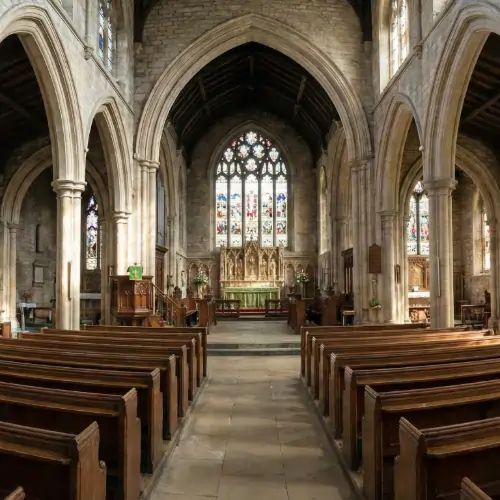
The sanctuary sees the heaviest weekly foot traffic and contains the most sensitive materials. A full sanctuary service usually includes:
Pew disinfection on backs, armrests, and hymn racks (high-touch surfaces per CDC guidance)
Altar, pulpit, and lectern care using pH-neutral products that won't strip finishes
Sound equipment surfaces (microphones, mixing boards, music stands)
Hymnals, prayer books, and visitor materials sanitized or rotated
Aisle and pew floor vacuuming, with carpet extraction quarterly
Stained glass cleaning using non-abrasive, ammonia-free solutions
We avoid disinfectants on bare wood pews and altar pieces. The CDC explicitly notes that wooden surfaces are difficult to clean and disinfect properly, so we use pH-neutral wood-safe products instead. This protects both the finish and the structural integrity of the wood.
Fellowship Halls and Community Rooms
Fellowship halls are multi-use spaces that turn over rapidly between services, classes, meals, and events. Cleaning typically covers:
Table and chair sanitation, with disinfection on shared dining surfaces
Floor cleaning matched to surface type (carpet, vinyl, tile, hardwood)
Kitchen-adjacent areas including service counters and pass-throughs
Trash removal and replenishment of supplies between events
Setup and breakdown coordination for back-to-back gatherings
For event-driven cleaning surges around weddings, funerals, and holidays, see our event cleaning strategies for churches.
Restrooms, Nurseries, and Common Areas
Restrooms and childcare spaces carry the highest infection risk in any religious facility. CDC guidance calls for daily cleaning of high-touch surfaces in spaces occupied by young children. Standard scope includes:
Restroom disinfection of toilets, sinks, faucets, partitions, and door handles using EPA-registered disinfectants
Floor mopping with germicidal cleaners
Soap, paper towel, and toilet paper restocking
Nursery and childcare room sanitation with EPA Safer Choice products (safer for young children and those with sensitivities)
Toy and play surface disinfection
Lobby, entryway, and stairwell maintenance
Church Offices and Administrative Spaces
Pastoral offices, counseling rooms, and administrative areas follow standard professional office cleaning protocols: surface dusting, floor care, trash removal, restroom service, and electronics sanitation. Discretion matters in these spaces given the sensitive nature of pastoral counseling and member records, so professional cleaners trained on confidentiality protocols are the appropriate choice.
How Is Church Cleaning Different from Commercial Cleaning?
Standard commercial janitorial assumes a uniform office or retail environment. Religious facilities don't fit that model. Four differences shape how the work has to be done.
Historic material preservation
Many churches contain irreplaceable materials: hand-carved wood pews, century-old stained glass, stone floors, brass fixtures, and antique vestments. Standard commercial cleaning chemicals can strip finishes, etch glass, dull stone, or corrode metal. Professional church cleaning uses pH-neutral wood treatments, ammonia-free glass cleaners, and material-specific stone care products to preserve these elements rather than degrade them.
Multi-use facility scheduling
A typical office building has one use pattern: weekday business hours. A church has weekly services, midweek prayer groups, weekend weddings, holiday programming, daycare or preschool operations, fellowship meals, and rotating community events. Cleaning has to fit into the gaps between these activities without disrupting any of them.
Event-driven cleaning surges
Standard offices generate predictable cleaning demand. Churches see massive surges around Christmas, Easter, weddings, funerals, and community events. Professional church cleaning companies include event preparation and post-event turnover as a defined service, not an afterthought.
Volunteer integration
Many congregations rely on volunteer cleaning teams for routine upkeep. Professional cleaning isn't a replacement for that work; it complements it by handling heavy tasks (floor stripping, deep carpet extraction, hood cleaning, restroom sanitation), specialized work (stained glass, wood preservation), and consistent weekly maintenance. Our team coordinates with volunteer schedules so the two efforts reinforce each other instead of duplicating work.
Why Do Churches Need Professional Cleaning Services?
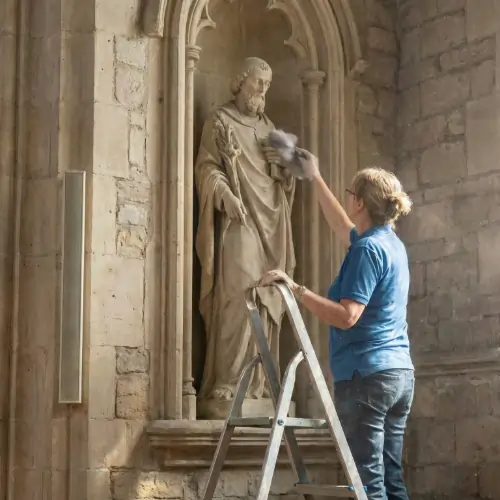
Three concrete reasons drive most congregations toward professional support.
Health protection for the congregation
Sunday services place hundreds of people in close contact across pews, hymnals, communion rails, and shared restrooms. Childcare and nursery rooms add another layer of risk. Per CDC community facility guidance, high-touch surfaces should be cleaned at least daily, with EPA-registered disinfectants applied where someone has been ill. Volunteer crews working a few hours a week typically can't sustain that frequency or chemical handling competency.
Heritage preservation that extends facility lifespan
A stripped pew finish costs thousands to refinish. Etched stained glass can't always be restored. Worn carpets in high-traffic aisles get replaced years earlier than properly maintained ones. Specialized cleaning for religious facilities protects the asset value of the building. Ziva Cleaning Services uses material-appropriate products and methods so the cleaning process itself extends rather than shortens the life of every surface.
Consistency and liability coverage
A volunteer team with rotating membership can't deliver the same quality every week. Cleaning standards drift, supplies run out, and accountability gets diffuse. Professional cleaners come in on a fixed schedule with documented procedures and supervisory oversight. We are also bonded, insured, and our staff is background-checked, which matters for facilities with childcare programs, counseling spaces, or financial offices. If something happens during cleaning, the liability is properly covered. With a volunteer crew, it usually isn't.
For pricing-specific information on what these services cost, see our church cleaning pricing breakdown.
How Often Should a Church Be Professionally Cleaned?
Cleaning frequency depends on congregation size, weekly service count, event calendar, and the number of programs operating in the facility. The table below shows typical recommendations.
Area | Typical Frequency | Notes |
|---|---|---|
Sanctuary | Weekly minimum | Increase to twice weekly for larger congregations or multiple Sunday services |
Restrooms | Daily during occupied days | Multiple times daily during high-traffic events |
Fellowship halls | After each event or use | Plus weekly baseline maintenance |
Nurseries and childcare rooms | Daily when occupied | Per CDC guidance for spaces with young children |
Offices | Weekly | Daily for high-traffic administrative areas |
Kitchens | After each use plus weekly deep clean | NFPA 96 requirements apply if commercial cooking equipment is in use |
Carpet extraction | Quarterly | Higher-traffic facilities may need bi-monthly |
Stained glass and high windows | Quarterly to annually | Depends on building height and exposure |
Floor strip and wax (vinyl/tile) | Annually or bi-annually | Coordinate around major holiday programming |
For sanctuary-specific cleaning protocols and detailed pew, altar, and pulpit care procedures, see our sanctuary-specific cleaning protocols. For a printable task list, see the full church cleaning checklist.
Ziva Cleaning Services has cleaned religious facilities across Berks County, PA for over 14 years. Our team is bonded, insured, and background-checked, and we build cleaning plans around your worship schedule and event calendar. Schedule a free on-site assessment and we'll walk your facility, identify what each area needs, and put together a custom proposal.


