

Importance of Professional Religious Facility Cleaning
The unique nature of a sanctuary requires a specialized approach to maintenance that goes far beyond standard janitorial work. These spaces often feature high ceilings, intricate architectural details, and a variety of surfaces that range from historic wood to delicate upholstery. Sanctuaries host large numbers of people in relatively close proximity, which is why they can quickly become hubs for the spread of germs if proper disinfection strategies are not in place.
Professional religious facility cleaning services focuse on the intersection of public health and material preservation. It is about creating a baseline of hygiene that protects the most vulnerable members of your community, such as the elderly and young children. By adopting rigorous protocols, religious organizations can prevent the degradation of expensive interior assets while demonstrating a proactive stance on congregational safety. According to the EPA, maintaining high standards of indoor air quality and surface cleanliness is essential for public buildings to remain healthy environments for all occupants.
Establishing Daily and Weekly Sanctuary Cleaning Protocols
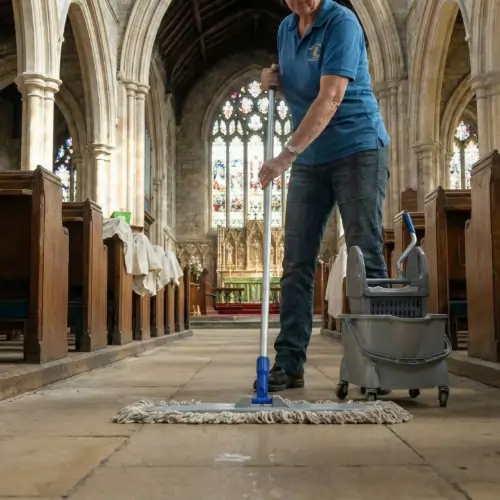
To maintain a pristine worship environment, a sanctuary needs a structured rotation of care that addresses both immediate needs and long-term hygiene. Relying solely on a quick "straightening up" before Sunday services is rarely enough to manage the accumulation of dust and biological contaminants that settle in large rooms. A professional protocol involves a tiered system where high-traffic zones receive daily attention, while deeper structural cleaning occurs on a weekly basis.
High-Touch Surface Disinfection Strategies
The primary goal of a sanctuary cleaning protocol is to break the chain of infection. In a religious setting, high-touch surfaces are everywhere: the backs of pews, wooden armrests, hymnals, and the handles of entry doors. To clean these effectively without spreading pathogens from one area to another, Ziva Cleaning Services utilizes the "S-pattern" wiping technique. This method involves wiping in a continuous, overlapping motion from top to bottom, ensuring that the cloth never passes over a clean area twice with the same side.
Furthermore, the effectiveness of any disinfectant relies heavily on "dwell time." This refers to the specific amount of time a liquid disinfectant must remain wet on a surface to successfully kill the bacteria or viruses listed on its label. Many volunteer teams make the mistake of spraying and immediately wiping, which often leaves the pathogens intact. A professional sanctuary cleaner ensures that every surface is treated with the correct chemical for the specific material, allowing for the full dwell time required for true sterilization.
Floor Care and HEPA-Filtration Vacuuming
Sanctuaries are often characterized by vast floor areas, frequently covered in heavy carpeting or historic stone. These floors act as a giant filter for the building, trapping pollen, skin cells, and outdoor pollutants brought in by the congregation. Standard commercial vacuums often exhaust small particles back into the air, which can be particularly bothersome for members with allergies or respiratory issues.
The gold standard for church cleaning services is the use of HEPA-filtration vacuums. They are capable of trapping 99.97% of particles as small as 0.3 microns, ensuring that the dust pulled from the carpet stays inside the machine. For hard flooring, such as marble or polished hardwood, the protocol involves microfiber mopping. Microfiber is superior to traditional cotton mops because the split fibers create a larger surface area that physically "grabs" and holds onto dirt rather than pushing it around the floor.
Specialized Cleaning for Pews, Altars, and Pulpits
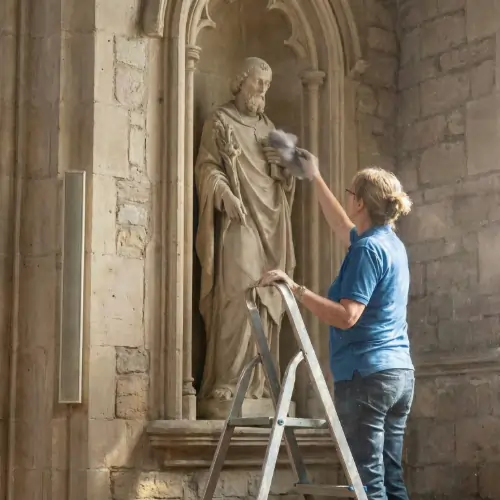
The furniture within a sanctuary is often the most significant investment a church makes. Whether you have hand-carved wooden pews or modern upholstered seating, these items require specific care to prevent premature wear. When addressing pews, it is vital to distinguish between cleaning and polishing. Over-polishing wood with silicone-based products can lead to a sticky buildup that actually attracts more dust. A professional protocol uses pH-neutral cleaners that remove oils and grime without stripping the finish.
For altars and pulpits, which are the focal points of the service, the cleaning must be meticulous. These areas often house sensitive electronics, microphones, and expensive altar cloths. Dusting should always be done with electrostatic cloths that prevent debris from settling on sound equipment. If your facility is currently auditing its maintenance needs, referring to a church cleaning checklist can help ensure no corner of the chancel or nave is overlooked.
Maintaining Nursery and Community Areas for Safety
While the sanctuary is the focal point, the auxiliary spaces like nurseries and community halls require an even more stringent level of sanitation. Young children frequently touch the floor and share toys, making these areas high-risk zones for the transmission of seasonal illnesses. The protocol for a church nursery involves the use of non-toxic, hospital-grade disinfectants that are safe for environments where children spend time. The same principles guide professional daycare cleaning programs, where infant- and toddler-safe disinfection is the daily baseline rather than a Sunday-morning reset.
In fellowship halls or kitchens, the focus shifts to food safety and grease management. Hard surfaces must be degreased and sanitized following every event to prevent the growth of mold or the attraction of pests. Because these areas are often used for multiple purposes throughout the week (from mid-week Bible studies to community dinners) they require a flexible but firm cleaning schedule that keeps pace with the facility's usage.
Seasonal and Event-Based Maintenance Schedules
Sanctuary usage is rarely consistent throughout the year. The demands of the Christmas and Easter seasons, for example, require a significant ramp-up in cleaning frequency. Professional protocols must account for these surges in attendance to maintain a high standard of excellence.
Preparing for High-Traffic Services and Weddings
Weddings and funerals are high-pressure events where the appearance of the sanctuary is non-negotiable. For these occasions, the cleaning protocol should include a "top-to-bottom" refresh. This includes polishing the entry glass, ensuring the vestibule is free of cobwebs, and detailing the areas where photography is most likely to occur. Strategic church event planning involves scheduling a deep clean at least 48 hours before the event, followed by a final "touch-up" walk-through on the morning of the ceremony.
Deep Cleaning and HVAC Air Quality Management
At least twice a year, a sanctuary should undergo a deep cleaning that addresses the areas not covered in weekly maintenance. This includes dusting high-reach light fixtures, ceiling fans, and the tops of organ pipes. Perhaps most importantly, the HVAC vents must be vacuumed and wiped. Large religious buildings often have complex ductwork that can accumulate significant amounts of dust over time. Keeping these vents clean prevents "dust fall" during services and ensures the air remains fresh for the congregation.
Transitioning from Volunteer Teams to Professional Cleaning Services
Many houses of worship begin their journey with dedicated volunteer teams. While the heart behind volunteer cleaning is admirable, there often comes a point where the size of the facility or the complexity of the materials exceeds what a volunteer can manage. Professional services provide a level of consistency and liability protection that a volunteer group cannot match.
When you hire a professional church service, you are paying for specialized equipment and the expertise to use it. Professionals understand the chemistry of cleaning. They know which product will remove a wax stain from a stone floor without causing permanent etching. Additionally, having a professional team allows the congregation to focus on their mission and ministry rather than the logistics of building maintenance. For those concerned about the financial transition, reviewing church cleaning services prices can provide a clearer picture of how to budget for professional care without compromising the church’s other financial goals.
Partnering with Ziva Cleaning Services for Your Sanctuary
At Ziva Cleaning Services, we recognize that your sanctuary is more than just a commercial building. We treat every religious facility with the reverence and attention to detail it deserves. Our teams are trained in specific sanctuary cleaning protocols that prioritize both the health of your members and the longevity of your historic assets. We don't believe in a one-size-fits-all approach; instead, we work with church administrators to develop a custom maintenance plan that fits your service schedule and specific architectural needs.
We provide the professional touch required to keep your sacred space pristine. We utilize green cleaning technologies and HEPA-filtration to ensure that your sanctuary remains a healthy environment for worship every day of the week. Contact us today to schedule a comprehensive walkthrough and receive a customized cleaning protocol tailored to your sanctuary.


