

Retail cleaning services cost between $0.08 and $0.18 per square foot, or roughly $200 to $3,000+ per month depending on store size, foot traffic, and cleaning frequency. Ziva Cleaning Services provides this 2026 pricing guide to help store owners and retail facility managers budget accurately and compare professional retail cleaning services quotes confidently.
What Retail Cleaning Services Cost on Average
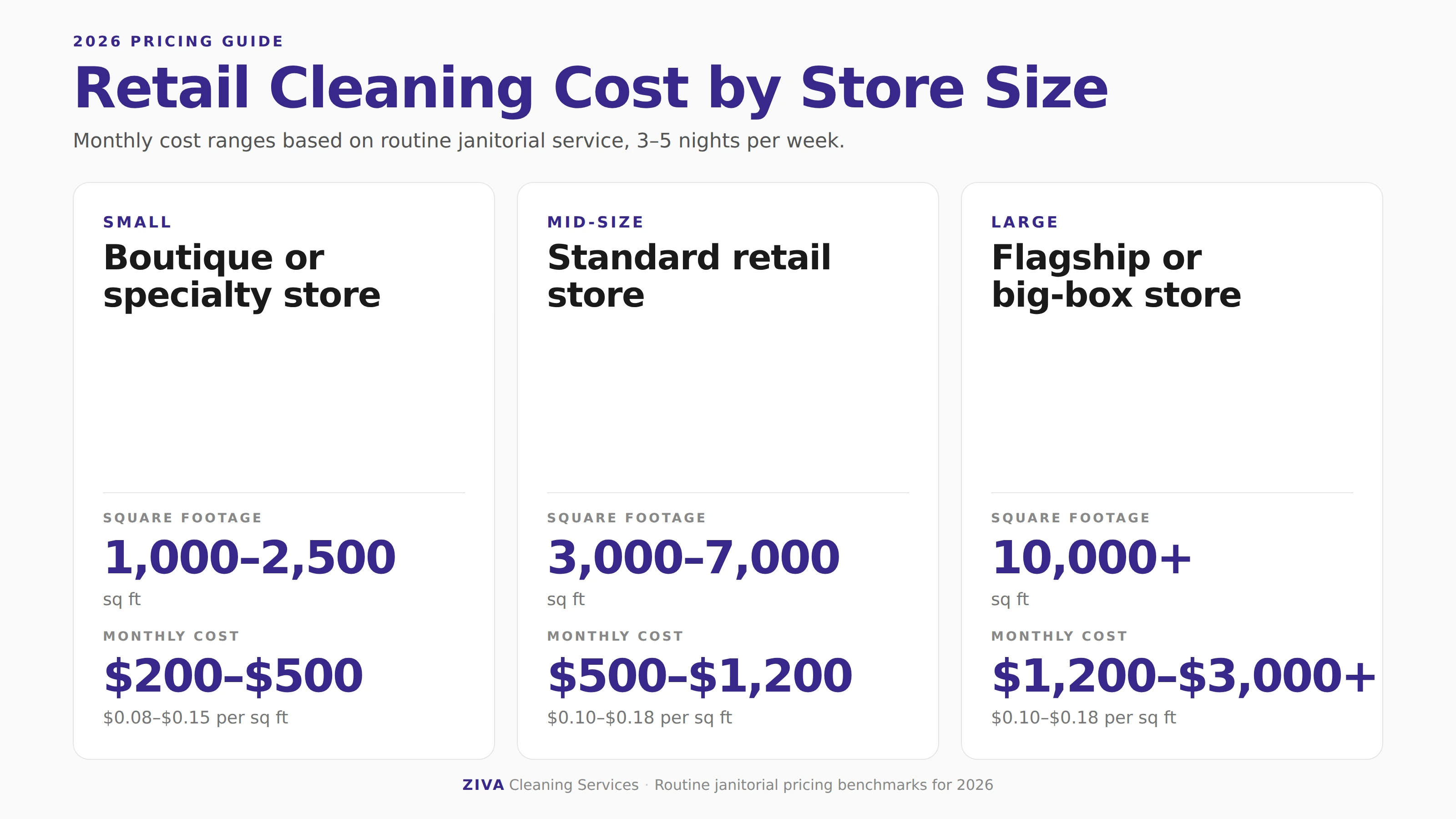
Monthly cleaning costs for retail stores vary based on the size and complexity of the space. The table below provides a general reference for what store owners can expect when requesting quotes. These figures reflect routine janitorial service performed three to five times per week, which is the standard frequency for most retail environments.
Store Type | Approx. Square Footage | Monthly Cost Range | Per Sq Ft Range |
|---|---|---|---|
Small boutique or specialty store | 1,000–2,500 sq ft | $200–$500 | $0.08–$0.15 |
Mid-size retail store | 3,000–7,000 sq ft | $500–$1,200 | $0.10–$0.18 |
Large flagship or big-box | 10,000+ sq ft | $1,200–$3,000+ | $0.10–$0.18 |
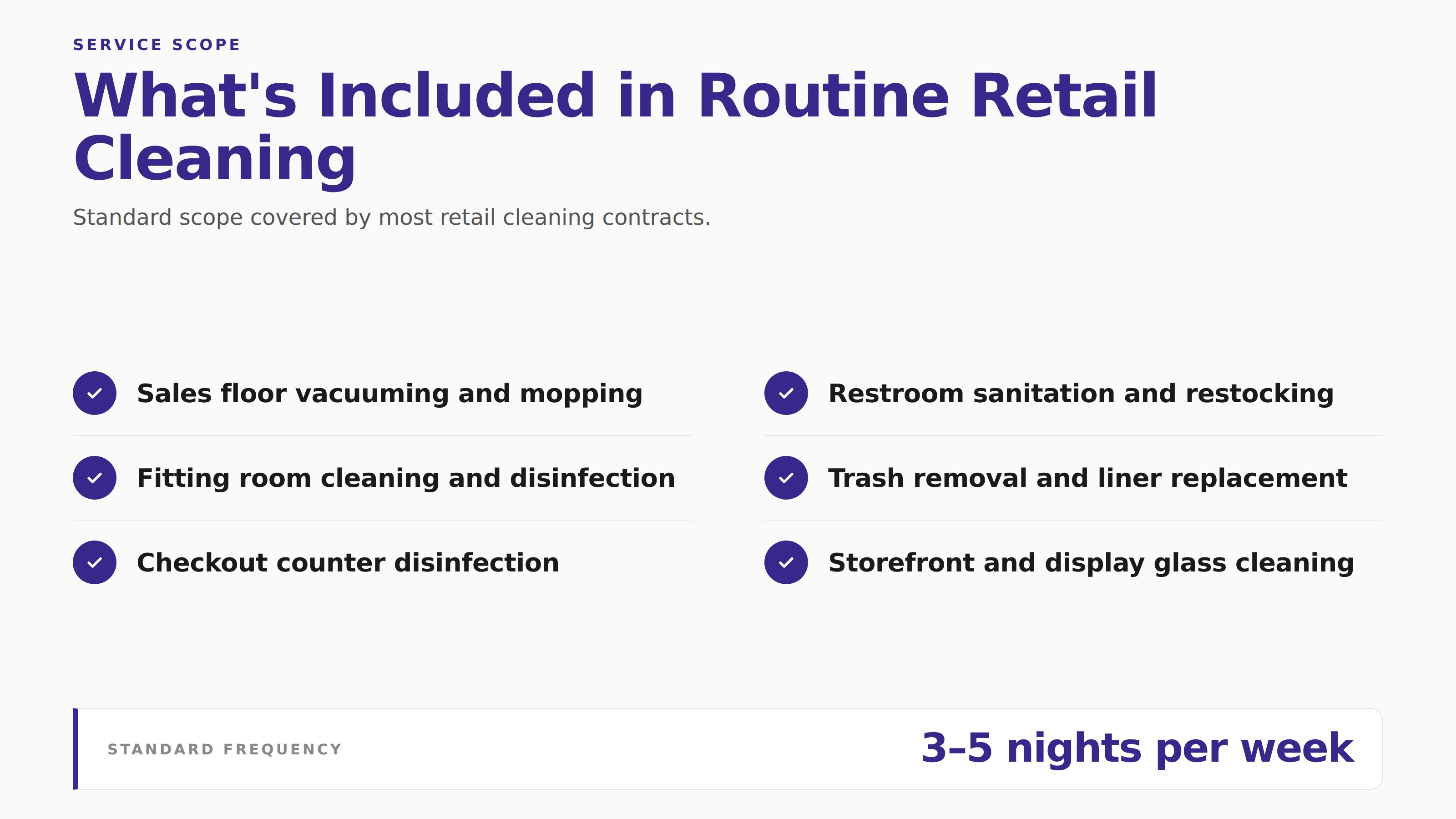
These ranges cover routine janitorial services such as sales floor cleaning, restroom sanitation, fitting room maintenance, trash removal, and high-touch surface disinfection. Deep cleaning, floor care, and specialty services like window washing are typically priced as add-ons and increase the monthly total.
Cost Factors That Affect Retail Cleaning Pricing
No two retail stores carry identical cleaning costs. Several variables determine where a store falls within the ranges above, and understanding these factors helps store owners evaluate quotes more effectively.
Store Size and Layout
Square footage is the baseline for almost every retail cleaning quote. A 2,000-square-foot specialty boutique with an open floor plan requires significantly less labor than a 7,000-square-foot store with multiple departments, fitting rooms, stockrooms, and customer service counters. Multi-level stores add time for stairwell and escalator cleaning. Stores with extensive display glass, polished concrete, or hardwood flooring require methods and products beyond basic mopping.
Foot Traffic and Customer Volume
Foot traffic is the single biggest cost driver that separates retail from standard office cleaning. A high-traffic mall location near a food court accumulates dropped food, spilled drinks, and tracked-in soil at a far higher rate than a low-traffic standalone boutique. Stores with daily customer volumes above several hundred shoppers typically need nightly service. Quieter locations can often run on three visits per week and pay less per month.
Cleaning Frequency and Hours
Frequency is the second largest variable after square footage. A store cleaned five nights per week will cost 50% to 100% more per month than the same store cleaned three nights per week. Most retail cleaning happens before opening or after closing to keep crews invisible to customers, and after-hours scheduling adds modest premiums in some markets. High-traffic stores sometimes layer in a daytime porter for restocking restrooms and addressing spills during business hours, which adds to the monthly total.
Scope of Services
Routine janitorial covers daily essentials: vacuuming sales floors, mopping hard surfaces, restroom sanitation, trash removal, and disinfecting checkout counters and fitting room benches. Deep cleaning, including carpet extraction, floor stripping and waxing, display glass detailing, and full fitting room sanitation, is typically scheduled monthly or quarterly and billed separately. Bundling routine and specialty services with one provider often delivers a lower per-service rate than scheduling each task individually. The right scope depends on store type, surface mix, and brand standards. A comprehensive retail cleaning checklist helps clarify what every visit should include.
Seasonal and Event-Driven Needs
Retail is one of the most seasonal industries in commercial cleaning. Holiday rushes, back-to-school windows, sales events, and product launches all generate temporary spikes in foot traffic and demand for additional cleaning hours. A store that operates on three visits per week from January through October may need daily service from Black Friday through New Year's Eve. Most providers price these surges as scheduled add-ons rather than emergency callouts, which keeps costs predictable when planned in advance.
Location and Regional Labor Rates
Cleaning rates in metropolitan areas typically run 10% to 20% higher than in suburban or rural markets due to elevated labor costs and operational overhead. Within Pennsylvania, a store in downtown Philadelphia will generally receive higher quotes than a store in Reading or Wyomissing. Regional cost of living, local competition among retail cleaning providers, and travel distance to the store all influence the final price. Multi-store contracts covering several locations under a single agreement often qualify for volume pricing in the 10% to 20% range.
Retail Cleaning Cost by Service Type
Beyond routine janitorial, retail stores frequently require specialty services priced as add-ons or separate line items. Understanding these categories helps store owners build an accurate annual cleaning budget rather than being surprised by costs outside the base contract.
Service Type | Typical Cost Range | Frequency |
|---|---|---|
Routine janitorial (sales floor, restrooms, fitting rooms, trash) | $0.08–$0.18/sq ft per visit | 3–5x per week |
Deep cleaning (carpet extraction, floor care, detail work) | $0.15–$0.40/sq ft per session | Monthly or quarterly |
Window and storefront glass cleaning | $4–$8 per standard pane | Monthly or quarterly |
Floor stripping, waxing, and polishing | $0.20–$0.50/sq ft | Quarterly or semi-annually |
Carpet extraction (high-traffic zones) | $0.20–$0.40/sq ft | Quarterly |
Pressure washing (storefront, sidewalks) | $0.10–$0.30/sq ft | Seasonal |
Holiday or sales event surge cleaning | Quoted per event | As needed |
A small boutique that needs only routine janitorial three nights per week may spend $200 to $500 per month. A large flagship store requiring daily cleaning, monthly deep cleans, quarterly floor restoration, and seasonal pressure washing could exceed $3,000 per month when all services are included.
How Retail Cleaning Costs Compare to Other Commercial Facilities
Retail falls in the lower-to-middle range of commercial cleaning costs. Stores cost less to clean per square foot than medical facilities, which require biohazard handling and clinical-grade disinfection, but more than industrial warehouses where large open floors clean efficiently per square foot.
Facility Type | Typical Cost per Sq Ft | Key Cost Driver |
|---|---|---|
Standard office | $0.07–$0.15 | Size and frequency |
Bank or financial institution | $0.07–$0.25 | Security, glass, high-touch surfaces |
Retail store | $0.08–$0.18 | Foot traffic and floor care |
Medical or healthcare | $0.15–$0.35 | HIPAA compliance, biohazard protocols |
Industrial or warehouse | $0.05–$0.15 | Square footage volume |
The premium retail stores pay over standard offices comes from foot traffic, the volume of display and storefront glass requiring frequent attention, and the reputational stakes tied to store appearance. According to the CDC's guidelines for cleaning and disinfecting facilities, frequently touched surfaces like checkout counters, fitting room handles, and shared payment terminals should be cleaned at least daily, and retail stores have a higher density of these surfaces per square foot than most office environments.
Why Retail Cleaning Costs Differ from Standard Office Cleaning
Foot traffic is the most visible difference. A retail store with 200 daily customers tracks in soil, moisture, and debris at a far higher rate than an office with 50 employees, requiring more frequent floor care and entryway maintenance. Storefront glass, display cases, and fitting room mirrors generate a high volume of fingerprints and smudges that need regular attention to maintain a polished appearance.
Fitting rooms add a hygiene dimension that offices do not have. Benches, hooks, mirrors, and floors in fitting rooms need daily disinfection, and tags, hangers, and forgotten items must be cleared between customers. Restrooms in retail stores serve customers in addition to staff, so they need more frequent cleaning and restocking than a typical office restroom serving the same headcount.
Floor finishes also matter. Retail stores often use polished concrete, terrazzo, hardwood, or premium tile to support the brand image, and these finishes need protective floor care that aligns with OSHA 29 CFR 1910.22 walking-working surface standards to prevent slip-and-fall incidents. Finally, the reputational cost of a poorly maintained store is higher than for most workplaces. Customers form impressions within seconds, and a clean, well-presented store directly supports dwell time, basket size, and return visits, which is part of the value of professional retail cleaning over inconsistent in-house efforts.
How to Budget for Retail Cleaning Services
Store owners who prepare the following information will receive more precise and comparable bids from retail cleaning providers.
Start by measuring the total square footage of the store, including back-of-house spaces such as stockrooms, employee break rooms, fitting rooms, and restrooms. Identify high-touch zones that need daily attention: checkout counters, payment terminals, fitting room benches and mirrors, door handles, and display glass. Determine how many days per week cleaning is needed and whether it should happen before opening, after closing, or during business hours. List any specialty surfaces such as polished concrete, hardwood, terrazzo, or large-format glass that need specific care.
When comparing bids, request itemized proposals that separate routine janitorial from deep cleaning and specialty services. A lump-sum quote makes it difficult to identify what is included versus what will generate additional charges later. Ask each provider about insurance and bonding coverage, supervisor presence, after-hours access protocols, and whether cleaning supplies are included or billed separately.
Ready to get an accurate cleaning estimate for your retail store? Ziva Cleaning Services provides free on-site assessments and itemized proposals tailored to your store's layout, foot traffic, and seasonal patterns. With 14+ years of experience serving retailers, our background-checked, bonded, and insured team delivers the consistency your store image depends on. Schedule a free on-site assessment to get started.

