

Ziva Cleaning Services has built commercial cleaning programs for more than 14 years. Every program starts with a structured checklist. Without one, critical tasks slip and facilities drift toward inconsistent cleanliness.
What Is a Commercial Cleaning Checklist?
A commercial cleaning checklist is a written schedule that assigns every cleaning task to a specific frequency, so nothing is missed and nothing is duplicated. Research from the University of Arizona found that a typical office desk can harbor around 400 times more bacteria than a toilet seat, with keyboards and phones ranking among the most contaminated surfaces in a workplace. Structured cleaning reverses that buildup.
A well-built checklist serves five functions:
Consistency across shifts, teams, and supervisors
Accountability so every task has a clear owner and frequency
Compliance support for OSHA, CDC, and industry-specific standards
Cost control by preventing deferred maintenance on floors and soft surfaces
Professional appearance that reinforces trust with employees and tenants
The checklist below applies to most general business environments. Industries with additional compliance layers add specialized protocols on top of this baseline, covered in the customization section. For the foundational service definition, see our breakdown of daily janitorial upkeep and why every business needs it.
Daily, Weekly, and Monthly Tasks at a Glance
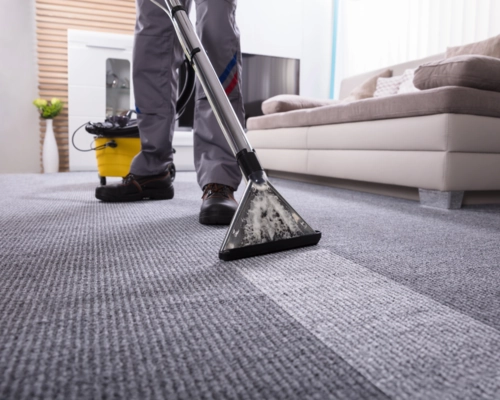
This table summarizes what each frequency prioritizes and how the three layers fit together.
Frequency | Primary Focus | Example Tasks |
|---|---|---|
Daily | High-touch surfaces and high-traffic areas | Trash removal, restroom sanitation, disinfection of door handles and shared equipment, entryway floors |
Weekly | Detail work and prevention of buildup | Baseboards, vents, interior glass, appliance interiors, detailed floor care |
Monthly | Deep cleaning and scheduled maintenance | Carpet extraction, hard-floor refinishing, high dusting, upholstery sanitation, vent cleaning |
Quarterly / Annual | Specialty services and code-driven cleaning | Pressure washing, kitchen hood cleaning per NFPA 96, tile and grout restoration, exterior window cleaning |
Daily Commercial Cleaning Tasks
Daily cleaning targets high-traffic areas, shared surfaces, and anything a visitor or employee sees within the first 30 seconds of entering the building. Most daily work is completed after hours or via day porter coverage.
Reception and Lobby
The reception area drives first impressions and is the most inspected zone during facility walkthroughs.
Empty all waste bins and replace liners
Wipe and disinfect the reception desk, sign-in area, and phones
Clean visitor seating, armrests, and side tables
Disinfect door handles, push plates, and entry hardware
Spot-clean entry glass, both sides of the door
Vacuum entry mats and high-traffic carpet
Mop hard floors in the lobby and entryway
Workstations and Office Areas
Desks, keyboards, and phones rank among the most bacteria-laden surfaces in any facility.
Empty trash and recycling at every desk
Dust accessible horizontal surfaces
Disinfect shared keyboards, phones, and conference room equipment
Wipe accessible desk surfaces in shared or hot-desk environments
Vacuum carpeted floors and sweep or mop hard floors
Breakroom and Kitchen Areas
Breakrooms accumulate food residue and bacteria faster than any other non-restroom space.
Disinfect countertops, tables, and chair backs
Clean sinks and faucets with a disinfectant that meets EPA registration for hard non-porous surfaces
Wipe exterior appliance surfaces including microwave, refrigerator, coffee maker, and dishwasher
Disinfect shared appliance handles and buttons
Empty trash and recycling, replace liners
Sweep and mop hard floors
For a deeper treatment of breakroom protocols, see our office breakroom cleaning checklist.
Restrooms
Restroom condition is the strongest predictor of how tenants and visitors rate a facility's overall cleanliness.
Clean and disinfect toilets, urinals, and flush handles
Sanitize sinks, faucets, and counters
Clean mirrors and polish chrome fixtures
Refill soap, paper towels, toilet paper, and seat covers
Disinfect door handles, stall partitions, and dispensers
Empty trash bins and sanitary waste containers
Mop and disinfect floors with attention to corners and baseboards
High-Touch Surfaces That Require Daily Disinfection
High-touch surfaces are the shared contact points that transfer pathogens between users throughout the day. The CDC recommends that high-touch surfaces in shared environments be cleaned and disinfected at least once daily, and more frequently in high-traffic or high-risk settings.
In a standard commercial facility, the following points must be disinfected every day with an EPA-registered disinfectant:
Entry and interior door handles, push plates, and panic bars
Light switches and thermostat controls
Elevator buttons, both call and cabin
Stairwell handrails
Shared desk surfaces and hot-desking workstations
Phones, keyboards, and mice in shared offices
Conference room table centers and AV remotes
Breakroom appliance handles and buttons
Water cooler dispensers and vending machine buttons
Restroom faucets, soap and paper dispensers, and stall handles
Reception sign-in surfaces and visitor pens
Disinfectant selection depends on the pathogens of concern, surface material, and required contact time. For a deeper protocol framework, see our breakdown of high-touch disinfection in healthcare environments.
Weekly Commercial Cleaning Tasks
Weekly tasks catch what daily cleaning cannot reach. Dust, grime, and soap residue accumulate gradually on surfaces that do not warrant daily attention, and the weekly routine prevents that buildup from becoming a monthly deep-cleaning problem.
Floors and Dusting
Detail vacuum carpeted areas, including edges, corners, and under accessible furniture
Mop hard floors with an appropriate disinfectant for the floor type
Spot-treat stains on carpet before they set permanently
Sweep and wet-mop stairwells and service corridors
Dust baseboards, door frames, vent covers, and horizontal surfaces above arm's reach
Glass, Partitions, and Entry Hardware
Clean interior glass partitions and conference room walls
Wipe down interior windows and window sills
Polish metal door frames, kick plates, and entry hardware
Clean glass on office doors, reception dividers, and display cases
Breakroom Appliances
Clean the interior of microwaves, including the turntable and vents
Wipe the interior of refrigerators where accessible
Run the dishwasher empty with a cleaning cycle
Descale coffee makers per manufacturer guidance
Restroom Detail Work
Scrub tile grout lines to prevent mold and mildew buildup
Clean tile walls and stall partitions from top to bottom
Polish chrome fixtures and mirrors to a streak-free finish
Disinfect trash receptacles, inside and out
Monthly Commercial Cleaning Tasks
Monthly tasks protect the building's assets. Carpets, hard floors, upholstery, and HVAC components all degrade without scheduled deep cleaning, and recovery from neglect costs more than prevention.
Carpet and Hard Floor Deep Cleaning
Professional carpet extraction every one to three months extends carpet life and maintains air quality. High-traffic lobbies may need monthly extraction, while private offices can go quarterly. Extraction should follow the IICRC S100 Standard for Professional Cleaning of Textile Floor Coverings. Vinyl, VCT, and hard surface floors benefit from monthly machine scrubbing, with stripping and waxing scheduled quarterly or semi-annually.
High Dusting and Air Quality
Accumulated dust on high shelves, light fixtures, ceiling corners, and HVAC grilles degrades air quality and adds to allergen load. Monthly high dusting with extension tools or lift equipment keeps these areas from feeding dust back into the occupied space. Fabric chairs, sofas, and cubicle partitions should be vacuumed monthly with HEPA equipment, with professional upholstery cleaning scheduled quarterly.
Interior Windows and Inspections
Full-detail interior window cleaning on a monthly schedule preserves sightlines and daylight quality, separate from daily entry-glass spot cleaning. Monthly supply audits, equipment inspections, and safety checks belong on the same cadence as deep cleaning: restocking janitorial closets, checking vacuum belts and filters, and verifying spray bottle dilution.
Tasks to Schedule Quarterly or Annually
Pressure washing for building exteriors, sidewalks, and parking lots typically runs quarterly. Kitchen hood and exhaust cleaning in any facility with a commercial kitchen follows NFPA 96 frequency requirements, ranging from monthly to annually depending on cooking volume. Tile and grout restoration, exterior window cleaning, and annual HVAC duct cleaning round out the long-cycle maintenance list.
How to Customize a Commercial Cleaning Checklist for Your Industry
The checklist above is the general commercial baseline. Every industry layers additional requirements on top of it, and a checklist that ignores those layers exposes the facility to compliance risk.
Four factors drive every real-world adjustment: facility size, foot traffic volume, hours of operation, and industry compliance requirements. The industry layer is where generic checklists fail:
Medical and healthcare facilities add HIPAA-compliant protocols, terminal cleaning, biohazard handling, and CDC disinfection guidelines.
Restaurants and commercial kitchens add NFPA 96 kitchen hood cleaning, FDA food-contact surface standards, and grease management.
Industrial and manufacturing facilities add OSHA chemical handling, equipment degreasing, and color-coded cleaning systems to prevent cross-contamination.
Post-construction environments add rough-through-final cleaning phases, dust control under OSHA 29 CFR 1926 silica standards, and debris removal protocols.
Before finalizing any checklist, we conduct a free on-site assessment. No two facilities have identical traffic patterns, compliance obligations, or operational windows.
Our professional commercial cleaning services cover facilities across Berks County, the Lehigh Valley, and surrounding Pennsylvania markets, and every engagement starts with a free on-site assessment. If your facility is in Chester County, our guide to commercial cleaning services in Exton PA breaks down what local businesses can expect from a tailored cleaning partnership. Contact us for a customized proposal and we will walk through your space, identify your priorities, and deliver a plan matched to your operations.


