

Walking into a spotless office sets the tone for both employees and visitors. Clean, organized spaces help build trust, boost productivity, and promote health. But keeping every corner of a workplace consistently clean requires structure. That’s where a detailed office cleaning checklist comes in handy. From the reception area that makes the first impression to the restrooms that reflect hygiene standards, every space deserves attention.
This Ziva Cleaning Services checklist outlines the essential daily, weekly, and monthly office cleaning tasks to maintain a professional, safe, and welcoming environment.
Ultimate Office Cleaning Checklist
Reception Area
The reception is the first touchpoint for clients and visitors. A tidy and inviting space communicates professionalism and reliability.
Dust and wipe down the reception desk, chairs, and tables.
Clean glass doors, partitions, and windows to remove fingerprints and smudges.
Vacuum carpets and rugs, paying attention to corners.
Mop and disinfect hard floors.
Empty trash bins and replace liners.
Straighten reading materials and keep decor dust-free.
Private Offices and Conference Rooms
Employees and guests spend long hours in these spaces, making cleanliness critical for productivity and comfort.
Wipe and sanitize desks, chairs, and conference tables.
Dust shelves, cabinets, and other surfaces.
Disinfect shared technology such as phones, keyboards, and remote controls.
Vacuum carpets and mop hard floors regularly.
Empty bins daily and replace liners.
Remove cobwebs and dust light fixtures.
For cost-conscious businesses, it’s useful to understand office cleaning costs per square meter.
Restrooms
Restrooms are high-traffic areas and must meet strict hygiene standards. Neglecting them can negatively impact both staff morale and company image.
Disinfect toilets, urinals, and sinks daily.
Clean mirrors, glass, and metal fixtures for a polished look.
Restock supplies: toilet paper, hand soap, and paper towels.
Mop and sanitize floors with disinfectant.
Empty sanitary bins and wastebaskets.
Spot clean walls, partitions, and doors.
Break Rooms and Kitchens
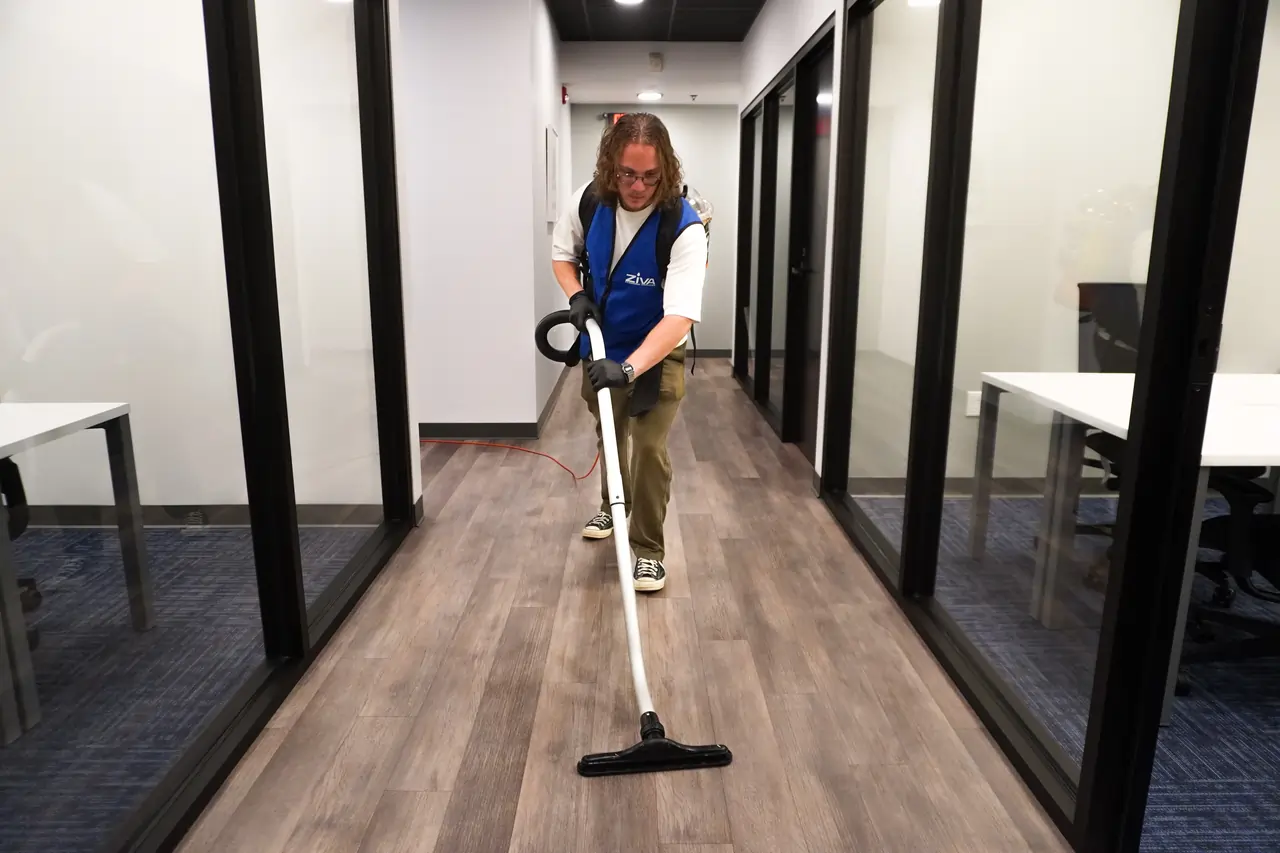
Clean break areas support employee health and satisfaction. These spaces require extra attention due to food preparation and shared use, it is vital to follow the correct food serving sanitation standards.
Wipe down tables, counters, and chairs with disinfectant.
Sanitize sinks and polish stainless steel appliances.
Clean inside microwaves, fridges, and toasters weekly.
Sweep, mop, or vacuum floors daily.
Empty bins and replace liners regularly.
Restock supplies such as dish soap, paper towels, and sponges.
Keeping food-related spaces spotless also helps prevent pest issues, a challenge explored in Rough vs Final Cleaning in Construction, which touches on cleaning strategies for dust and debris control.
Common Areas and Hallways
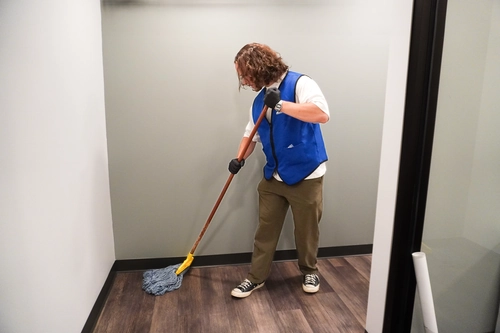
Shared spaces like corridors and lounges often get overlooked but are vital for overall workplace presentation.
Vacuum or mop floors daily.
Wipe down light switches, handrails, and door handles.
Dust artwork, shelving, and decorative items.
Clean glass partitions and interior windows.
Straighten chairs and remove clutter.
Periodic and Deep Cleaning Tasks
Beyond daily and weekly tasks, periodic deep cleaning keeps offices in top condition.
Steam clean carpets, rugs, and upholstered furniture.
Wash interior and exterior windows quarterly.
Dust vents, blinds, and ceiling fans.
Polish wooden furniture and surfaces.
Clean behind heavy appliances and furniture.
Service HVAC systems to improve air quality.
Why Choose Ziva Cleaning?
At Ziva Cleaning Services, we understand that no two offices are the same. Our customized cleaning plans ensure every corner of your workplace (from reception to restrooms) meets the highest standards. With experienced teams, eco-friendly products, and flexible scheduling, we help businesses across industries maintain healthier, more productive environments.
Keep your office spotless without lifting a finger. Contact us today to create a tailored cleaning checklist for your business.


